Collection: Jacques-Enguerrand Gourgue (Haitian, 1930-1996)
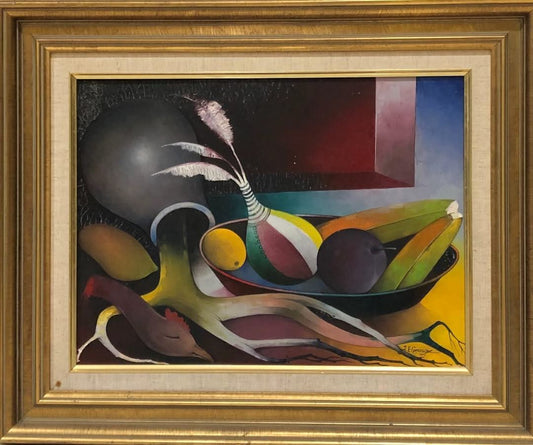
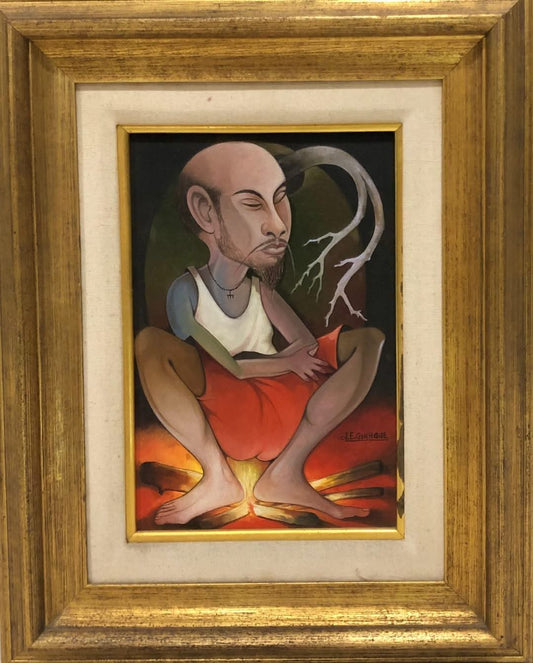
Jacques-Enguerrand Gourgue (1930–1996) was one of the most important and influential painters in modern Haitian art. Born in Port-au-Prince, he developed a highly distinctive style that blends surrealism with elements of Haitian naïve painting, drawing deeply from rural life, symbolism, and Vodou imagery. A self-taught artist, Gourgue joined the Centre d’Art in 1947 and quickly gained international recognition. His landmark painting The Magic Table was exhibited at the Museum of Modern Art in New York in 1948, where it remains in the permanent collection. In 1949, he won the gold medal at the bicentennial exhibition in Port-au-Prince, establishing his reputation at an early age. His compositions are known for their poetic and symbolic complexity, often featuring peasants, skeletal trees, mountains, and spiritual imagery arranged in dreamlike settings. During the 1950s and 1960s, Gourgue lived in Spain, where exposure to modern European art, including Picasso, influenced his evolving style. His work has been widely exhibited internationally and sold at major auction houses such as Christie’s and Sotheby’s. Today, Jacques-Enguerrand Gourgue’s paintings are highly sought after by collectors for their originality, psychological depth, and central role in the development of Haitian modern art. Explore his available works below.